ACTIVITY 8: A LIFE IN LATE ADULTHOOD
INTRODUCTION
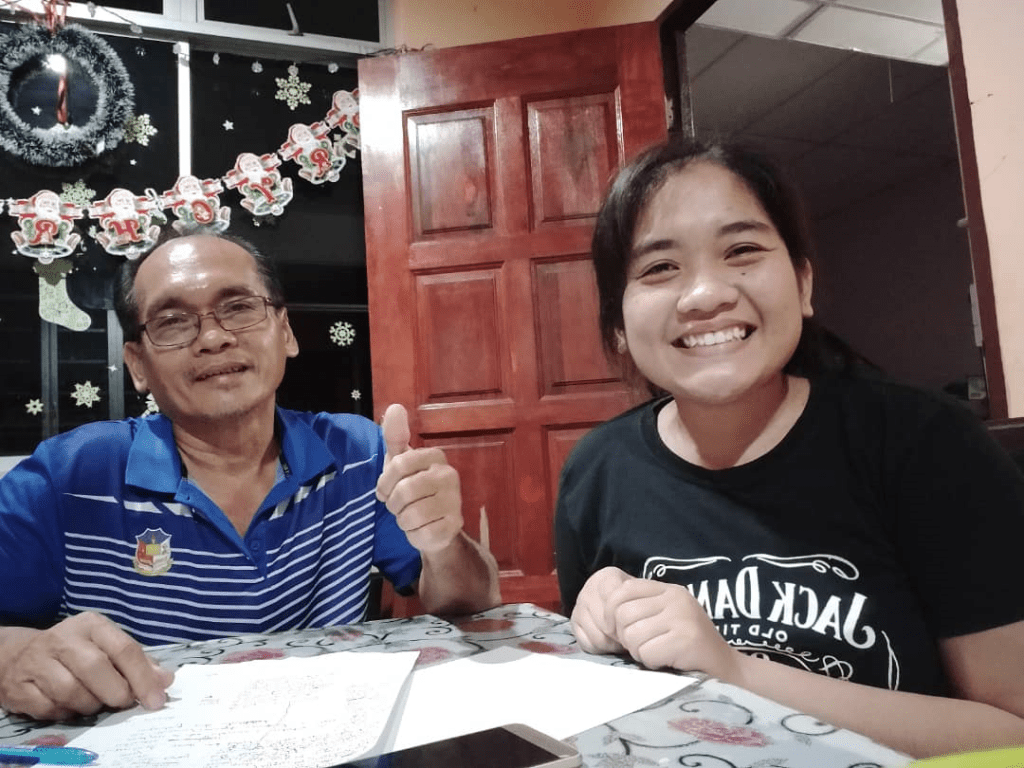
In activity 8, we want to look into the life in late adulthood. To do this we have interview a respondent.
Name: Mr Saba Anak Jana
Age (D.O.B): 2nd January 1955
Gender: Male
Place of birth: Sg. Petai, Nyelong Sarikei
Academic qualification: Degree holder
Life goals: be able to persue further study to enter colleges and Universities, to be sucessfull in career and become a sucessful english teacher.
Motto: ” Let the best be not good enough”
Family background : Instead of telling us his family background , from where he came from, Mr Saba share to us about his little family, how many child did he have and what did the do now. He is married in 1986 and have 5 children. His elder son was teaching in I-cats Kuching, the second child was a kindergarten teacher, the third child work in a plantation company in Sibu as assistant manager while the fourth child work as a production clerk in Cahya Mata Sarawak (CMS) Kuching and the youngest still studying in UMS.
LIFE STORIES
- Health and aging
When we come older and older, we need to look after our health. Some people say life begin in the 40’s, when I reached at the age of 40 I go to hospital for check up quite often. Then I become older and older when I reached 50 I become weaker and I need to use spectacles so I need to go to hospital more often for example 3 time in 2 month.
- Relationships
Relationship is really hard to look for. For example friends, after finished my university life it is really hard to keep in touch with old friends because we must go in our own way in our lives. Some of my friends pass away and some have health issues. Some of them are still contacting me.
- Important lesson
Become an english teacher in secondary school because when i see my students become sucessful I’am happy and grateful for what I have done to them. Some of them when i meet them in town or anywhere majority of them, they appriciate for what i have done to them.
- Life-long learning and Technology and humanity
I believe in this, every body learn new things in life as long as we live in this world we need to upgrade ourselves , for example I was not born in technological era, i do not have any hand phone, computer when I was born. when I entered to university we need to used all of this gadgets so we need to learn to use this type of gadgets. We can learn it from friends, privet instituition or we can go to university to acquire new knowledge otherwise we cannot move on in our lives.
REFLECTION
From this interview we can see that Mr Saba was a passionate man. He is also woudn’t giving up untill he is really sucess and achieve his own life goals.
Changes in the stages of ages can create a difference in a person’s life in form of physical transition. Many of the elderly are relatively healthy, especially if they adopt a healthy lifestyle. Many have medical illnesses, but these do not typically significantly impair behaviors or interfere with daily life. The proportion of older people suffering from physical disabilities has dropped. Even now, older people need more healthcare than younger ones. As for example, Mr Saba need to go to the hospital for check up trice in two month. This is because the older we get, the weaker our body is.
Intellectual changes in late adulthood do not necessarily lead to capacity declining. While fluid intelligence (the ability to see and use patterns and relationships to solve problems) decreases in later years, it has been shown that crystallized intelligence (the ability to use cumulative knowledge to solve problems and make decisions) increases slightly over life.
For many people, retirement at the age of 65 is the traditional option, while some work until much later. People have been found happier at retirement if they are not required to retire before they are ready and if they have sufficient income to sustain an acceptable standard of living. Chronic health problems like asthma, rheumatism and hypertension are gradually impacting quality of life of most individuals as they age.
In the era of development known as late adulthood, from the mid 60s to the end of life. At this point Erikson’s mission is called honesty vs. despair. He said late adulthood individuals reflect on their lives and experience either a sense of fulfillment or a sense of disappointment. People who feel proud of their accomplishments have a sense of dignity, and with little regrets, they will look back on their lives. Nevertheless, people who are not successful at this stage may feel as though their lives were wasted. They’re focused on what was “should,” “would” and “could.” With feelings of anger, sadness and despair they face the end of their lives.
CONCLUSION
During their lifetime human beings go through different stages. Until old age numerous inventions are accomplished. Old age can be made more fascinating if the proper emphasis on health and well being is preserved. Myths of old age and prejudices contribute to racism towards the aged.
 GIRLS' POWER BLOG